
Free AI Detector to Check Text for AI Writing
Paste any text below and this AI checker will tell you how likely it is that a language model wrote it. If it comes back flagged, run it through the humanizer to fix it before you submit, publish, or send it.
Result
Analysis details will appear here.
Benchmarked against leading AI detection models
Detects AI patterns across ChatGPT, Gemini, Claude & Copilot
What is an AI detector?
An AI detector, sometimes called an AI checker or an AI content detector, is a tool that reads a piece of text and estimates whether it was written by a large language model such as ChatGPT, Gemini, or Claude, or by a human being.
Those three names describe the exact same category of tool. There is no technical difference between an "AI detector" and an "AI checker," they are simply the two most common ways people search for it.
Every AI detector scores statistical patterns in writing and reports a probability score.
Probability Over Certainty
Every AI detector, including this one, works the same basic way. It does not "know" the answer with certainty, because no detector can. It scores statistical patterns in the writing and reports a probability. That probability is what shows up as your AI percentage.
Humanizer.gg's AI checker works naturally: paste any text into the box above and it returns an AI likelihood score along with a word count, so you can check your own writing before a teacher, editor, client, or a stricter detector like Turnitin catches something you did not expect.
Analyzing Writing Patterns in Isolation
Unlike a search engine or a plagiarism database, an AI detector is not comparing your text against anything that already exists online. It is analyzing the writing in isolation: how predictable the word choices are, how uniform the sentence structure is, and whether the overall pattern looks closer to how a language model writes by default or how a person writes when nobody is editing them down to an average.
Why the Distinction Matters
That distinction matters because it explains why an AI detector can flag text that is completely original, and why a plagiarism checker can come back clean on text that was clearly generated by a machine. They are measuring two different things, and this page covers both.
How does an AI checker actually work?
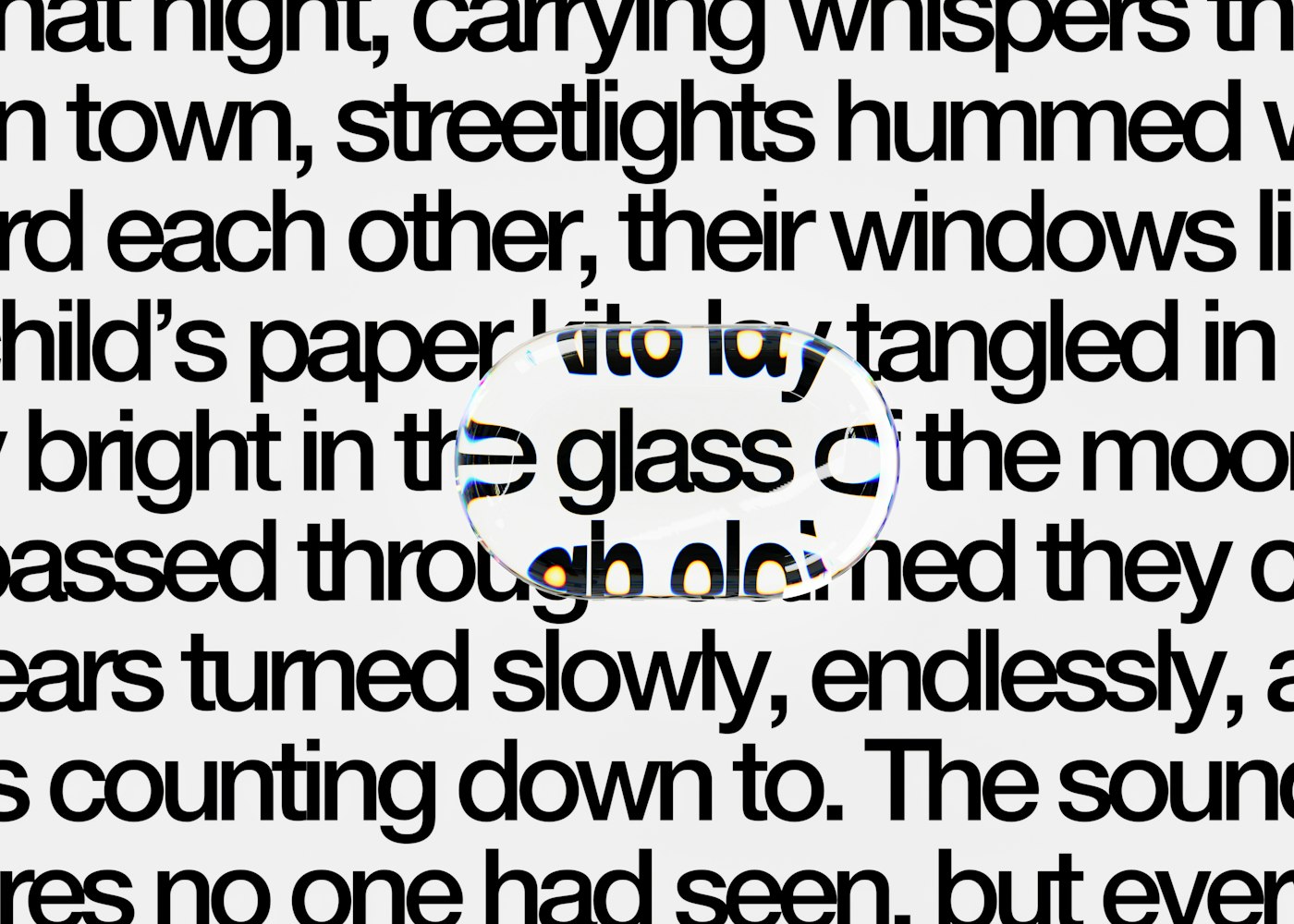
Detectors do not read for meaning. They measure statistical properties of the writing itself, and the two most important ones are perplexity and burstiness.
Perplexity
A measure of how predictable each word choice is. Language models tend to pick the statistically most likely next word, which produces low perplexity. Human writers make less predictable choices, reaching for specific or unusual phrasing, which produces higher perplexity.
Burstiness
A measure of sentence length variation across a passage. Human writing naturally mixes short fragments with long, winding sentences. AI writing tends toward a more uniform rhythm, sentence after sentence, unless it is specifically guided otherwise.
Classifiers & Pattern Learning
Some detectors add a third layer on top of perplexity and burstiness: a trained classifier. Instead of only measuring predictability, a classifier is a machine learning model that has studied thousands of confirmed AI and human samples, so it learns subtler patterns in punctuation, vocabulary range, sentence openers, and paragraph rhythm.
AI Watermarking Signatures
A newer approach some tools are experimenting with is watermarking, where an AI company embeds an invisible statistical signature directly into the tokens a model generates. Watermarking only works if the AI provider builds it into their model and the detector knows how to read it, so it currently covers a small slice of AI generated text rather than acting as a general solution.
The Universal Backbone
In practice, perplexity and burstiness remain the backbone of how nearly every public AI detector works, because they do not require special access to any AI company's internal systems. They just need the text.
This tool scores both signals and combines them into the single AI likelihood percentage you see above. No detector, including this one, is 100% accurate, read our full testing methodology for the honest details.
How to use this AI detector
Checking a piece of writing takes under a minute and does not require an account.
Paste your text
Copy the essay, article, email, or paragraph you want to check and paste it into the box at the top of this page.
Check the word count
Make sure you have at least 30 words. The checker can read up to 2,000 words in a single pass.
Click Analyze Text
The AI detector scans the writing for perplexity and burstiness and returns a score in a few seconds.
Act on the result
If it comes back flagged and you want it to read naturally in your own voice, send it straight to the humanizer.
What actually gets text flagged as AI
An AI checker is not looking for a single tell. It is adding up several small signals, and any piece of writing that leans into enough of them at once will score higher, whether a person or a model wrote it.
- Uniform sentence length. Paragraph after paragraph of medium length sentences, with almost no short punchy lines or long complex ones mixed in.
- Overused transition phrases. Words like "furthermore," "moreover," "in conclusion," and "it is worth noting" showing up repeatedly and predictably.
- Generic, safe vocabulary. Word choices that are technically correct but statistically the most common option available, rather than specific or personal phrasing.
- No personal detail or opinion. Writing that stays neutral and summary-like throughout, without a concrete example, anecdote, or clear point of view.
- Repeated sentence structure. The same subject-verb-object pattern, or the same "not only X but also Y" construction, appearing over and over.
- Suspiciously even formatting. Bullet points and headings that all follow an identical rhythm, or paragraphs that are all nearly the same length.
Why use Humanizer.gg's AI checker
There is no shortage of AI detectors online. Here is what makes this one worth bookmarking.
Instant, no queue
Results return in a few seconds. There is no waiting list, no processing queue, and no email verification before you get a score.
No account needed
Paste your text and check it. You do not need to sign up, log in, or hand over an email address just to see a percentage.
Model agnostic scanning
It is built to reason about the writing patterns shared across ChatGPT, Gemini, Claude, Copilot, and other mainstream models, not just one.
Paired with a humanizer
A flagged result is not a dead end here. Send the same text straight into the humanizer and check it again in one flow.
Generous word limit
Check up to 2,000 words per submission, enough for a full essay, blog post, or cover letter without splitting it into pieces.
Honest about limits
We are upfront that no detector is perfect, including this one, and we explain exactly how the scoring works instead of hiding it.
AI checker vs. plagiarism checker: not the same thing
These two tools get confused constantly, and they are built on completely different mechanisms.
A plagiarism checker
Compares your text against a database of existing documents, published sources, and the open web, looking for matching strings of words. It is checking whether your text already exists somewhere else. It has no opinion on whether a machine wrote it.
An AI detector
Analyzes the statistical fingerprint of the text in isolation, perplexity and burstiness, with nothing to compare it against. Text can be completely original and still score high on an AI detector, because originality and "statistically resembles AI output" are unrelated properties.
If you need both, run your text through a plagiarism checker for originality and this AI checker for AI likelihood. A clean result on one says nothing about the other.
Which AI writing tools can it flag?
The underlying signals, perplexity and burstiness, are not tied to one company's fingerprint, so this AI detector is not limited to spotting a single chatbot. It reads the writing pattern, not the logo behind it.
ChatGPT & GPT-5
OpenAI
Google Gemini
Anthropic Claude
Anthropic
Microsoft Copilot
Microsoft
Meta Llama
Meta
DeepSeek
DeepSeek
Perplexity AI
Perplexity
Jasper & other AI writers
Marketing copy tools
Detection is based on writing patterns rather than a vendor fingerprint, so output from other models is scored the same way.

How accurate is AI detection, really?
Every AI detector on the market, including this one, is measuring a correlation, not a certainty. High perplexity and high burstiness tend to look human. Low perplexity and low burstiness tend to look like AI. But "tend to" is doing a lot of work in that sentence.
Independent testing of the most popular AI checkers has repeatedly found that real world accuracy on edited or mixed human and AI text falls well short of the numbers listed on marketing pages. A detector that advertises accuracy in the high nineties on clean, unedited AI samples can drop to something much lower once the text has been paraphrased, restructured, or partly rewritten by a person.
Clean, well organized, grammatically simple writing can score as AI generated even when a person wrote every word. This shows up disproportionately for students who write in a formal style and for non-native English speakers, whose writing often uses simpler vocabulary and more uniform sentence structure, the exact pattern detectors associate with AI.
Different detectors also disagree with each other. The same paragraph can score low on one tool and high on another, because each is trained on different data with different thresholds. Treat any single AI checker score as one data point worth investigating, not a verdict to act on by itself.
How this AI detector compares to other popular checkers
A quick look at how the well known names in AI detection stack up on price, access, and who they are built for. Details change over time, always confirm current limits on each provider's own site before relying on them.
| Tool | Free tier | Signup required | Best known for |
|---|---|---|---|
| Humanizer.gg AI Detector | Fully free, up to 2,000 words per check | No | Quick checks paired directly with a humanizer |
| GPTZero | Free tier with a monthly word cap | Optional for basic checks | Classroom and education tools |
| Originality.ai | Limited trial credits, mainly paid | Yes | Content teams and publishers at scale |
| Copyleaks | Limited free scans | Yes | Institutions and enterprise plagiarism plus AI checks |
| ZeroGPT | Free with a per check word limit | No | Fast, no frills single checks |
| Turnitin | Not available to the public | Institutional access only | School and university submission review |
Free tier details are approximate and can change. Check each provider's site for current terms.
Who checks their text with an AI detector
Anyone who submits, publishes, or sends writing under their own name has a reason to check it first.
Students
Check an essay draft before Turnitin or GPTZero does, especially after using AI to brainstorm or outline.
Educators
Get a quick second signal on a submission worth a closer look, then decide on a case by case basis.
Editors & publishers
Screen freelance submissions before they go under a trusted masthead or newsletter byline.
Content & SEO teams
Spot check AI assisted drafts before they are published at scale across a site or client account.
Recruiters & hiring teams
Get a quick read on cover letters and application essays that feel unusually polished or generic.
Freelancers & agencies
Check outsourced or ghostwritten work before it goes back to a client under someone else's name.
Tips to keep your writing reading naturally
Whether you drafted with AI or wrote every word yourself, these habits lower the odds of a false flag and make the writing better to read besides.
- Vary your sentence length on purpose. Follow a longer sentence with a short one. Let a fragment stand on its own sometimes.
- Add one specific detail per section. A real number, a named example, or a personal observation breaks up generic phrasing fast.
- Cut the filler transitions. Read back through and delete every "furthermore," "moreover," and "in conclusion" you do not truly need.
- Read it out loud. If it sounds like a lecture, it probably reads like one too. Natural speech has more rhythm than a summary paragraph.
- Check it, then humanize what is left. Run a draft through the AI detector above first. If it flags sections, send those sections to the humanizer instead of rewriting from scratch.
Common questions
What is the difference between an AI detector and an AI checker?
Nothing. They are two names for the same kind of tool. Some sites call it an AI detector, others call it an AI checker or an AI content detector, and they all do the same job: they read a piece of text and estimate how likely it is that a language model wrote it, rather than a person.
How accurate is this AI detector?
No AI detector is 100% accurate, this one included. It scores statistical patterns, not certainty, and can produce false positives on formulaic human writing and false negatives on heavily edited AI text. Treat the score as a signal, not a verdict.
Can it detect ChatGPT, Gemini, and Claude text specifically?
Yes. It does not fingerprint one specific model. It looks for the perplexity and burstiness patterns common across mainstream language models, so it works across ChatGPT, Gemini, Claude, Copilot, Llama, and similar tools.
What is the difference between an AI detector and a plagiarism checker?
A plagiarism checker compares your text against a database of existing documents to see if it was copied from somewhere. An AI detector analyzes the statistical fingerprint of the text itself to estimate whether a language model likely generated it. Text can be 100% original and still score high on an AI detector, and text that scores as human can still be plagiarized. They answer two different questions.
Can AI detectors be tricked or fooled?
To some degree, yes. Heavy paraphrasing, manual editing, and dedicated humanizing tools can lower a detector score because they change the sentence rhythm and word predictability the detector is measuring. This is exactly why no single AI checker result should be treated as final proof either way.
Does paraphrasing AI text make it undetectable?
Basic paraphrasing, swapping a few words for synonyms, usually is not enough on its own. Most detectors are trained on paraphrased AI text and still catch the underlying uniform rhythm. Deeper rewriting that varies sentence length and structure has a better chance of lowering the score.
Is there a word limit?
Yes. You need at least 30 words for a reliable score, and each check can analyze up to 2,000 words. For longer documents, check them in sections.
Is my text stored or shared?
The text you paste is sent to our detection engine to generate your score and is not used to train third-party AI models. See our privacy policy for full details.
My text got flagged as AI written. Now what?
If you used AI to draft or polish the text and want it to read naturally in your own voice, run it through the humanizer, then check it again here.
Why did a paragraph I wrote myself get flagged as AI?
Detectors measure predictability, not authorship. Clean, simple, well structured writing can score as AI generated simply because it shares statistical traits with machine output, which happens disproportionately to formal writers and non-native English speakers. A flagged score is a reason to look closer, not proof of anything.
Is this free to use?
Yes, the AI detector above is free with no account required.
Which AI writing tools can this checker recognize?
The detector looks at statistical writing patterns rather than a single company's fingerprint, so it works across text drafted with ChatGPT, GPT-4o and GPT-5, Google Gemini, Anthropic Claude, Microsoft Copilot, Meta Llama, DeepSeek, and most other mainstream language models.
Detectors we benchmark against
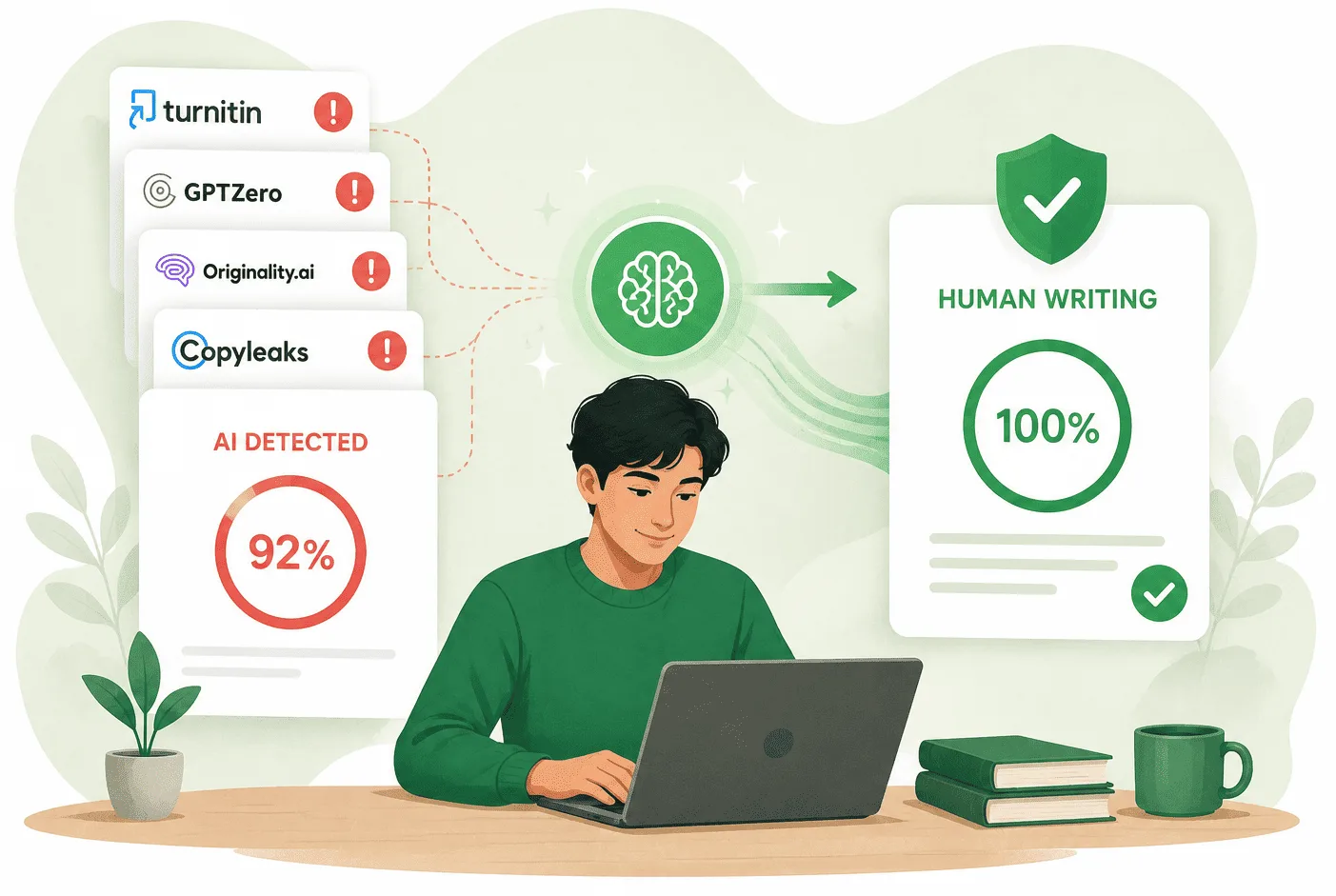
We test our own humanizer against these industry names, the same detectors our AI checker is designed to reason about when it scores a piece of text.
Flagged as AI? Fix it in seconds.
Run flagged text through our humanizer to restore natural rhythm and phrasing while keeping your meaning intact.